Details
Affirmative/ Positive sentence
Affirmative sentences are those sentences that expresses agreement.
It is also known as a positive sentence that states a fact or expresses a positive statement.
Example:
- “She sings beautifully.”
(subject: She, verb: sings, object: beautifully)
- “I love chocolate.”
(subject: I, verb: love, object: chocolate)
- “They are going to the park.”
(subject: They, verb: are going, object: to the park)
Negative sentence
Negative sentences are those sentences that express disagreement.
A negative sentence is a type of sentence that expresses negation or contradiction. In English, the most common way to form a negative sentence is by using the word “not” after the auxiliary verb or the main verb. Here are some examples:
-
“She does not sing well.” (subject: She, auxiliary verb: does, main verb: sing, negation: not)
- “I do not like spicy food.”
(subject: I, auxiliary verb: do, main verb: like, negation: not)
- “They are not going to the party.”
(subject: They, auxiliary verb: are, main verb: going, negation: not)
Auxiliary verb
Auxiliary verbs, also known as helping verbs, are used in English grammar to complement the main verb and create different verb forms, express tense, aspect, mood, voice, and other grammatical functions.
Here are some of the main types of auxiliary verbs in English:
Be verb: is, am, are, was, were
Have verb: have, has, had
Do verb: do, does, did
Model verb: can, could, may, might, must, shall, should, will, would,
Types of Affirmative and negative
1) “Be” verbs:
These auxiliary verbs include “am,” “is,” “are,” “was,” “were,“ etc. They are used to form continuous tenses, simple present tense.
Example:
- He is studying for the exam. (present continuous tense) He is not (isn’t) studying for the exam.
- He is a doctor.
- He is not a doctor.
- I am hiding under a bed.
- I am not hiding under a bed.
- I am hungry.
- I am not hungry.
1) “Be” verbs:
Example:
- They are playing on the ground.
- They are not playing on the ground.
- They/ Students are hardworking.
- They/ Students are not hardworking.
- The famous author was writing a poem.
- The famous author was not writing a poem.
- I was sick.
- I was not (wasn’t) sick.
- We were (weren’t) swimming in the pool.
- We were not swimming in the pool.
- We were happy.
- We were not happy.
“Have” verbs:
These auxiliary verbs include “have,” “has,” and “had.” They are used to form perfect tenses.
Example:
- They have finished their homework. (present perfect tense) They have not finished their homework.
- Rima has visited Manakamana Temple. Rima has not visited Manakamana Temple.
- She had already left when I arrived. (past perfect tense) She had not left when I arrived.
“Do” verbs:
The auxiliary verb includes “do,” “does,” and “did” in present and past simple tenses.
V1 |
V2 |
V5 |
| go | went | goes |
| eat | ate | eats |
Example:
Affirmative sentence |
Negative sentence |
| Students go to school. | Students do not go to school. |
| Students went to the school. | Students did not go to the school. |
| A Student goes to the school. | A student does not go to the school. |
| I eat meat. | I do not eat meat. |
| I ate meat. | I did not eat meat. |
| Sita eats meat. | Sita does not eat meat. |
“Do” verbs:
V1 |
V2 |
V5 |
| like | liked | likes |
| finish | finished | finishes |
Affirmative sentence |
Negative sentence |
| I like football | I do not like football |
| I liked football | I did not like football |
| She likes football | She does not like football |
| Hari finishes his homework. | Hari does not finish his food. |
| Hari finished his homework. | Hari did not finish his homework. |
| Students finish their homework. | Students do not finish their homework. |
Note:
V1 = do not (don’t)
V2 = did not (didn’t)
V5 = does not (doesn’t)
“Do” verbs:
V1 |
V2 |
V5 |
| Teach | taught | teaches |
| Catch | Caught | Catches |
| Drink | Drank | Drinks |
| Send | Sent | Sends |
| sing | Sang | sings |
| Throw | Threw | Throws |
| arrive | arrived | arrives |
| eat | ate | eaten |
| Buy | Bought | Buys |
Note:
V1 = do not (don’t)
V2 = did not (didn’t)
V5 = does not (doesn’t)
Modal verb:
Modal verbs are Auxiliary Verbs that provide additional and specific meaning to the main verb of the
| change their form to indicate tense or agreement with the subject. The main modal verbs in English are: |
They are used to express attitudes, abilities, permissions, obligations, and possibilities. Modal verbs do not
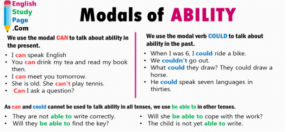
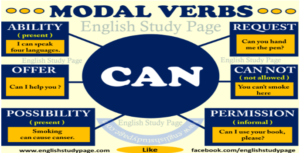
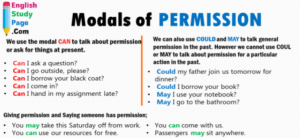
“Can”:
Used to express ability, permission, or possibility.
Example:
- “I can swim.” (ability)
- I can not (can’t) swim.
- “Can I borrow your pen?” (permission)
- It can rain today.
“Could”:
Similar to “can,” but it often indicates a past ability or a more polite form.
Example:
- “She could play the piano when she was young.” (past ability)
- She could not play the piano when she was young.
- “Could you please pass me the salt?” (polite request)
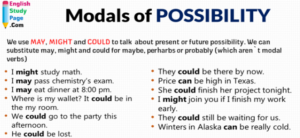
“May”:
Used to express permission, possibility, or uncertainty.
Example:
- “It may rain later.” (possibility)
- I may not rain later. (uncertainty)
- “May I use the restroom?” (permission)
- You may take that earing.
“Might”:
Similar to “may,” indicating a lower possibility or less certainty. Example:
- “He might arrive late.” (lower possibility)
- He might not arrive late.
“Must”:
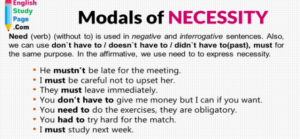
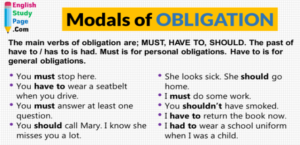
Used to express obligation, or necessity.
Example:
- “You must submit the report by tomorrow.” (obligation)
- You must not submit the report by tomorrow.
“Shall”:
Primarily used in questions to suggest an offer, a suggestion, or to indicate future
Example:
- I shall go to the park.(future actions)
- I shall not go to the park.
- We shall give you a football.
- We shall not give you a football..
- “Shall we go to the park?” (suggestion)
“Should”:
Used to express advice or expectation. Example:
- “You should study for the exam.” (advice)
- You should not study for the exam.
- “The train should arrive at 6 PM.” (expectation)
- The train should not arrive at 6 PM.
“Will”:
Used to indicate future actions, or predictions. Example:
- “I will help you with your project.”
- I will not (won’t) help you with your project.
- “It will rain tomorrow.” (prediction)
- It will not rain tomorrow.
“Would”:
Similar to “will,” but often used to express past habits, or conditional situations.
Preference== I would like to visit fun park today.
Example:
- Would you like to have tea?
- “She would always read before bed.” (past habit)
- She would not read before bed.
- “If I had more time, I would travel the world.” (conditional situation)
- If I had more time, I would not travel the world.
Exercise